
Thinkware Dash Cam Buying Guide Australia: Comparing the Latest Models
Thinkware makes some of the most capable dash cams sold in Australia — but the range takes a little decoding. Model names like U3000 Pro, U1000 Plus and T700 don’t tell you much on their own, and the right pick depends less on the spec sheet than on how you drive, where you park and whether you want to check on the car from your phone. This guide compares every Thinkware model in our range, in plain English, so you can buy once and buy right.
Why Australian drivers choose Thinkware
Three reasons come up again and again. First, parking protection: Thinkware’s radar-equipped models watch a parked car for approaching movement while using barely any power — a genuinely different approach from the motion-and-impact detection most brands rely on. Second, night performance: Sony STARVIS 2 sensors and Super Night Vision processing keep number plates readable after dark, which is when parked cars actually get hit. Third, the 3-year Australian warranty through TDJ Australia, Thinkware’s official distributor — long for the category, and honoured locally rather than through an overseas seller.
The current Thinkware range at a glance
| Model | Front / rear | Parking mode | Connected features | Included card (max) | Price |
|---|---|---|---|---|---|
| U3000 Pro | 4K HDR / 2K HDR (both STARVIS 2) | Built-in dual radar | Optional LTE Module (3 yrs Connected Basic included) | 64GB (512GB) | $1,299 |
| U3000 | 4K / 2K (STARVIS 2) | Built-in radar | — | 64GB (256GB) | $870 |
| U1000 Plus | 4K / 1080p (160° rear) | Motion + impact | Thinkware Connected via hotspot; 5-channel capable | 64GB | $699 |
| T700 | 1080p / 1080p | Motion + impact | 4G LTE built in (Telstra network, no subscription) | 64GB (128GB) | $672 |
| Q200 | 2K HDR / 1080p | Motion + impact | — | 32GB | $399 |
All five ship as complete front-and-rear kits with the hardwire cable in the box, so parking mode is ready from day one. All carry the 3-year warranty.
Best for everyday driving: Thinkware Q200
If you want honest, high-quality protection without overthinking it, the Q200 is the pick. The 2K front camera with HDR reads plates cleanly in daily traffic, the barrel-style body vanishes behind the mirror, and the hardwire cable is already in the box. Its trade-offs are fair at the price: the rear camera is 1080p rather than 2K, and safety-camera alerts need an optional GPS antenna. For a first dash cam, a smaller car or a second family vehicle, it’s the strongest value in the range.

Best video quality: Thinkware U3000 Pro
The U3000 Pro is the only model here with HDR on both cameras — 4K up front and 2K behind, both on Sony STARVIS 2 sensors. That combination matters most at night, when headlight glare is what usually beats a dash cam: HDR holds the plate detail while the sensor handles the low light. If your footage needs to survive an insurance dispute at 11pm on a wet road, this is the camera you want to have fitted.

Best parking protection: U3000 Pro and U3000
Radar is Thinkware’s signature trick, and it changes what parking mode can do. Instead of waking on impact — after the damage is done — the U3000 and U3000 Pro detect approaching movement and start recording the lead-up: the trolley drifting over, the car reversing too close, the person circling your ute. Because radar sips power, parked coverage lasts far longer on the same energy budget. The U3000 gets you the radar system with a 4K front camera for $870; the Pro adds dual radar and dual HDR for maximum coverage.

Best cloud-connected model: U1000 Plus — or the T700 for true anywhere-access
Two different answers here, and the distinction matters. The U1000 Plus carries the fullest Thinkware Connected suite — remote live view, geo-fencing, vehicle location, impact alerts — but connects through a Wi-Fi hotspot in the car. The T700 takes the opposite approach: 4G LTE is built into the camera, so with a cheap Telstra-network SIM it reports from anywhere Telstra reaches — caravan storage yards, airport car parks, job sites — with no Thinkware subscription at all. Choose the U1000 Plus for 4K footage plus cloud features; choose the T700 if remote access to a vehicle you leave places is the whole point. And if you want connectivity on the flagship, the U3000 Pro’s optional LTE Module includes three years of Thinkware Connected Basic in the box.


Best complete package: the bundles
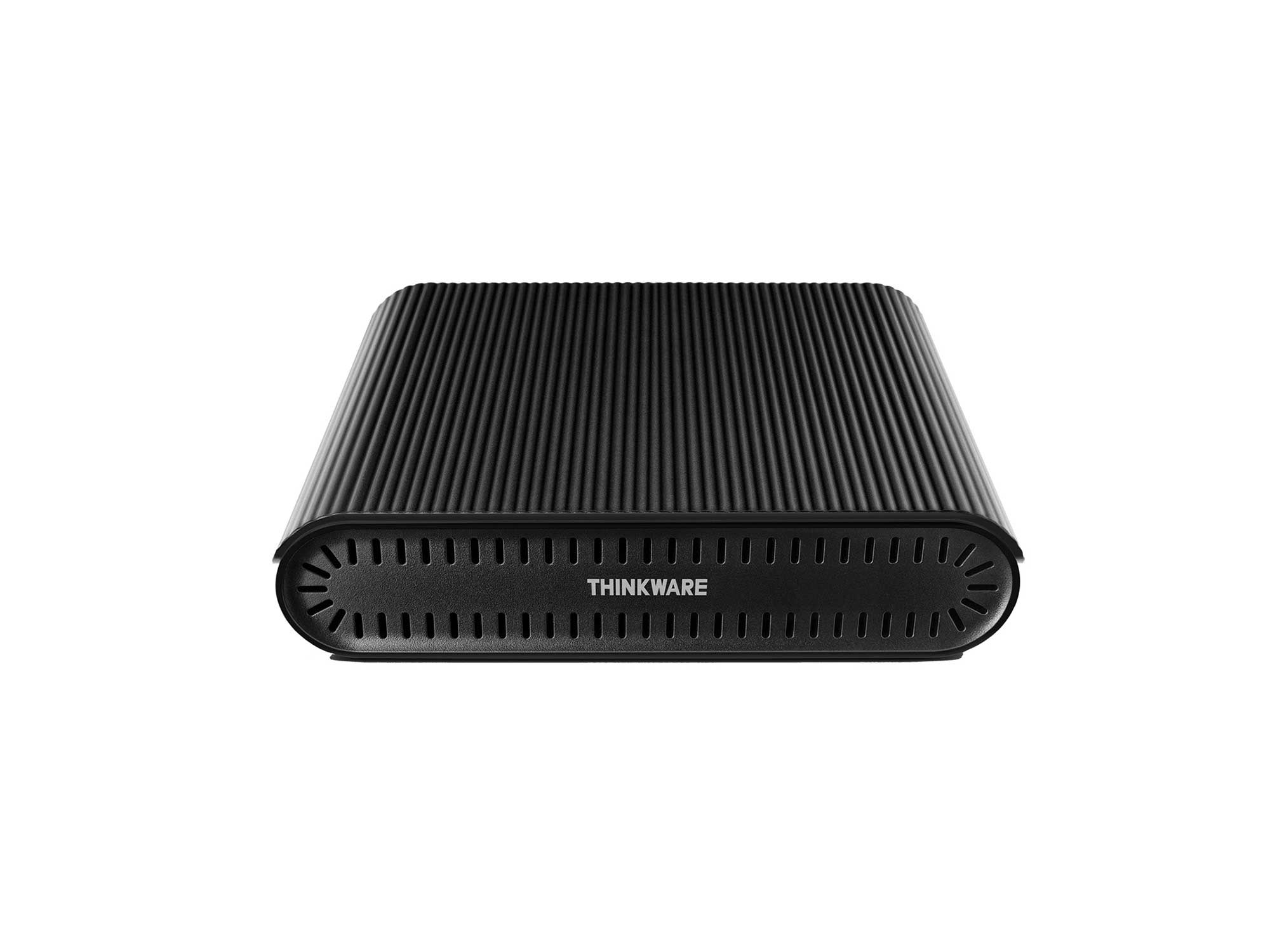
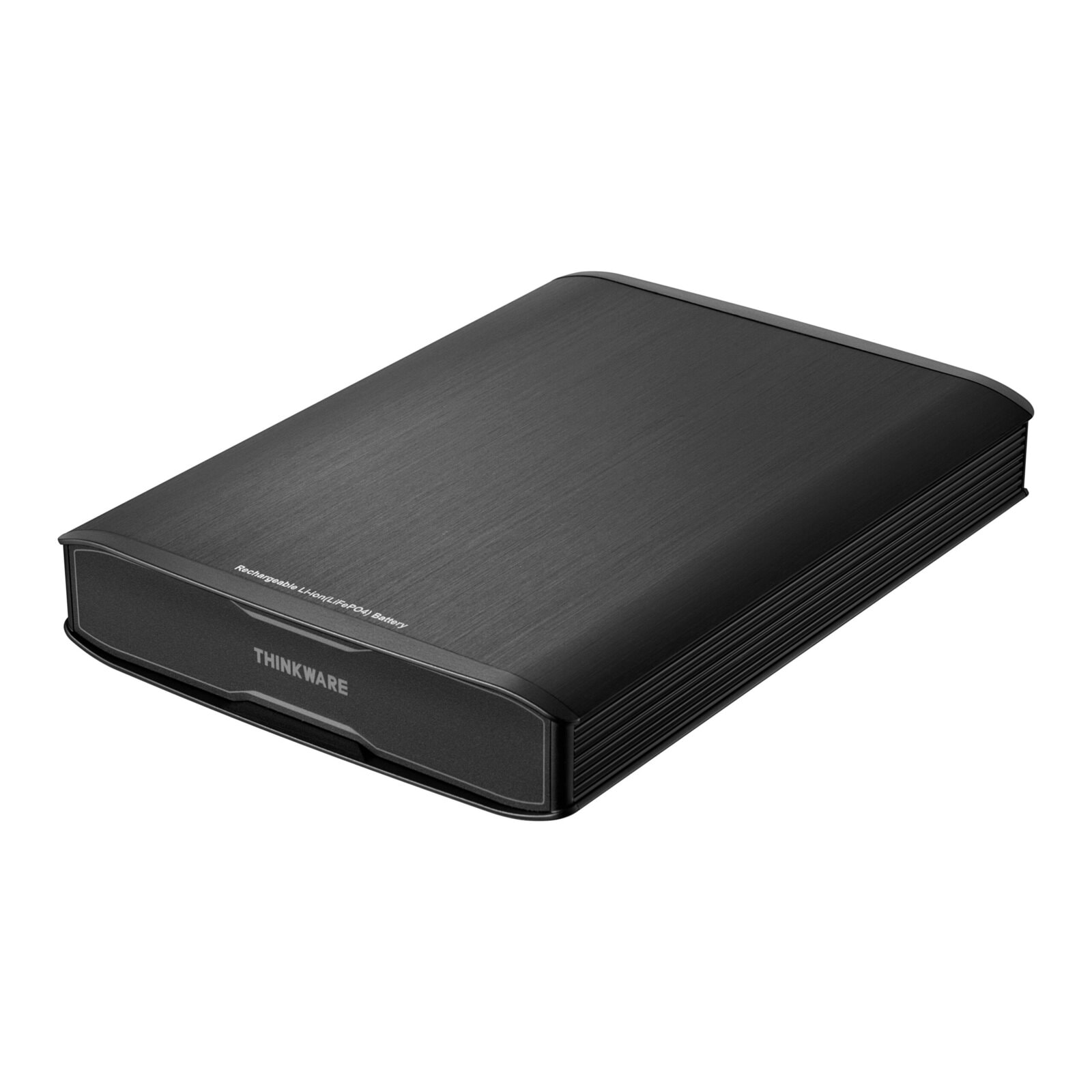
Parking mode is only as good as its power source, which is why we pre-match cameras with Thinkware’s iVolt batteries at a lower combined price. The standout pairing is the U3000 Pro + iVolt Max bundle — radar parking running for up to 40 days in energy-saving mode, with zero draw on the car battery. The U3000 + iVolt Max delivers most of that capability for hundreds less, and the U1000 Plus + iVolt Mini is the sensible complete 4K kit for daily drivers who park on the street overnight. All five bundles are in our Bundle Deals range.


Choosing the right SD card
Every model ships with a card (64GB on most, 32GB on the Q200), and for a 1080p or 2K camera recording drive-time only, that’s genuinely enough to start. Upgrade when you add parking mode or 4K: continuous surveillance plus large 4K files eat storage quickly, and more capacity means more history before footage loops. As a rule of thumb we suggest 128–256GB for the 4K models — noting each model’s supported maximum in the table above — and always a high-endurance card built for continuous recording; ordinary phone cards wear out fast in a dash cam. Our SD card guide covers recording times by card size.
When a battery pack is worth it
Hardwiring runs parking mode from your car battery with a voltage cut-off for protection — workable if you drive daily and park a few hours at a time. A dedicated battery becomes the right answer in four situations: you park on the street or in shared car parks overnight; you leave the car for days at airports or stations; you drive an EV or hybrid (whose 12V systems don’t like constant draw); or you simply never want to think about the cut-off kicking in. The iVolt Mini ($299) covers a full day and night and recharges in about 45 minutes of driving; the iVolt Max ($449) stretches to roughly 27 hours of active 2-channel recording or up to 40 days in energy-saving mode with radar models. Both are heat-tolerant LiFePO4 — the chemistry you want in an Australian summer cabin.
Hardwiring and parking mode: what to expect
Every kit includes the hardwire cable, and parking mode needs it (or an iVolt battery) — the cigarette-lighter plug alone only records while you drive. On compatible models, the plug-in OBD-II cable unlocks parking mode with no fuse-box work at all. Hardwiring a modern car properly means working around curtain airbags and a crowded fuse box, so many of our customers have us do it: we offer professional installation across Melbourne metro, fitting camera, battery and cabling in one visit. There’s more depth in our parking mode guide.
Frequently asked questions
Which Thinkware dash cam is the best overall?
For most buyers who can spend flagship money, the U3000 Pro — 4K + 2K with HDR on both cameras and dual radar parking is the strongest combination in the range. The U3000 is the value sweet spot if you want radar without the Pro price.
Do Thinkware dash cams require a subscription?
No. Recording, parking mode and app access are subscription-free. The T700 uses your own low-cost SIM with no Thinkware fees, and the U3000 Pro’s optional LTE Module includes three years of Thinkware Connected Basic.
Are Thinkware dash cams suitable for EVs and hybrids?
Yes — pair the camera with an iVolt battery pack so parking mode never touches the vehicle’s 12V system. Note that some EVs without a conventional fuse box may need an install check first; ask us about your model, or read our EV guide.
What warranty do Thinkware dash cams have in Australia?
Three years on cameras through TDJ Australia, Thinkware’s official Australian distributor, plus your rights under Australian Consumer Law. Accessories carry 12 months.
Can I add more than two cameras?
Yes — the U1000 Plus, Q200 and T700 support Thinkware’s Multiplexer Module, which builds 3, 4 or 5-channel systems with side, cabin and external rear cameras — popular with 4WD tourers, vans and rideshare drivers.
Our final recommendations
- Set-and-forget daily driver: Q200 — $399
- Radar parking on a budget: U3000 — $870 (or + iVolt Mini bundle, $1,149)
- 4K + cloud value: U1000 Plus — $699 (complete kit with iVolt Mini, $995)
- Vehicles you leave places: T700 — $672 + a cheap Telstra-network SIM
- No-compromise flagship: U3000 Pro — $1,299 (ultimate setup with iVolt Max, $1,629)
Still weighing it up? Browse the full Thinkware range, see how Thinkware stacks up against BlackVue and every other brand we sell in our 2026 best dash cam recommendations, or get in touch — we’re an Australian specialist team, we fit these cameras every week in Melbourne, and we’ll happily tell you which model you don’t need.